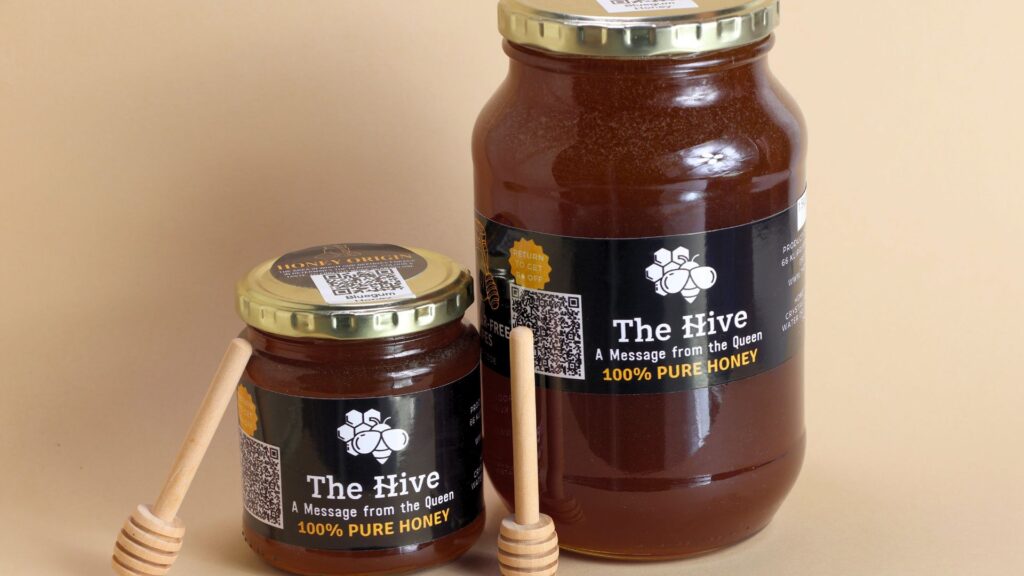

Honey is defined by where the bees forage. The flowers surrounding a hive determine the honey’s entire character — its flavour, colour, aroma, and texture. Think of honey like wine or coffee: the source matters.
The confusion comes from what most people see on supermarket shelves. Processed honey is treated to look the same all year round — one colour, one taste, one texture. Real honey doesn’t behave that way, and this is often the first clue when doing a raw honey test.
Our honey changes with the seasons because our bees forage on different floral sources throughout the year. Each harvest has its own personality. Some are light and floral, others dark, bold, and deeply complex. Honey can range from pale gold to deep amber, and from gently sweet to rich and intense — and this natural variation is actually a sign of purity.
If your honey never changes, that’s when it’s time to run a raw honey test.
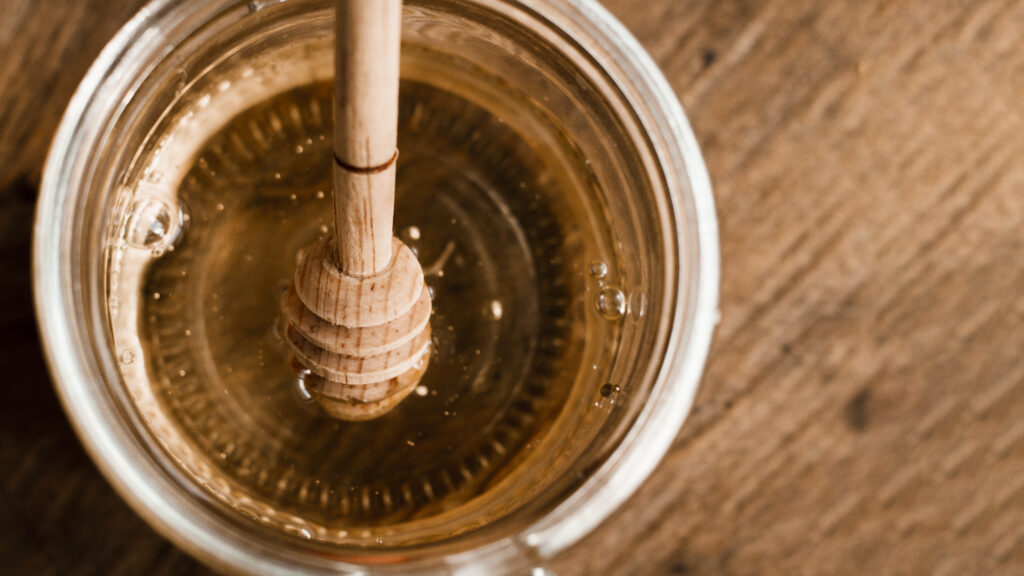
Here Are Some Simple Raw Honey Tests You Can Do at Home:
1)The Aftertaste Test
• Pure honey: Leaves a lingering aftertaste that stays with you.
• Fake honey: Has little to no aftertaste because it’s diluted.
2)The Bubble Test
• Pure honey: Forms one slow-moving, uniform bubble.
• Fake honey: Struggles to form bubbles and rushes upward.
3)The Label Test
• Pure honey: Clearly states Raw, Pure, Organic, or Non-irradiated and lists a single origin (e.g. South Africa).
• Fake honey: Mentions irradiated or heated, lists multiple countries of origin (e.g. South Africa/China), and often includes an expiry date — real honey doesn’t expire.
4)The Crystallization Test
• Pure honey: Naturally crystallises or goes firm over time.
• Fake honey: Stays liquid for months.
5)The Water Test
Drop a teaspoon of honey into water, stir for one minute, then let it settle.
• Pure honey: Settles at the bottom and remains intact.
• Fake honey: Dissolves into the water.
6)The Sugar Test
Taste the honey, close the jar, turn it upside down and back upright 4–5 times, then taste again.
• Pure honey: Tastes the same both times.
• Fake honey: Tastes different because added sugars settle at the bottom.
7)The Price Test
Honey is extremely labour-intensive for bees to make, and price matters.
• Pure honey: Usually ranges between R90–R160 per jar.
• Fake honey: Often priced suspiciously low, below R90 per jar.
A proper raw honey test doesn’t require fancy equipment — just awareness. If you know what to look for, real honey is easy to spot.
For more honey education, behind-the-scenes hive life, and seasonal harvests, follow us on Instagram @the.hive.company 🍯🐝